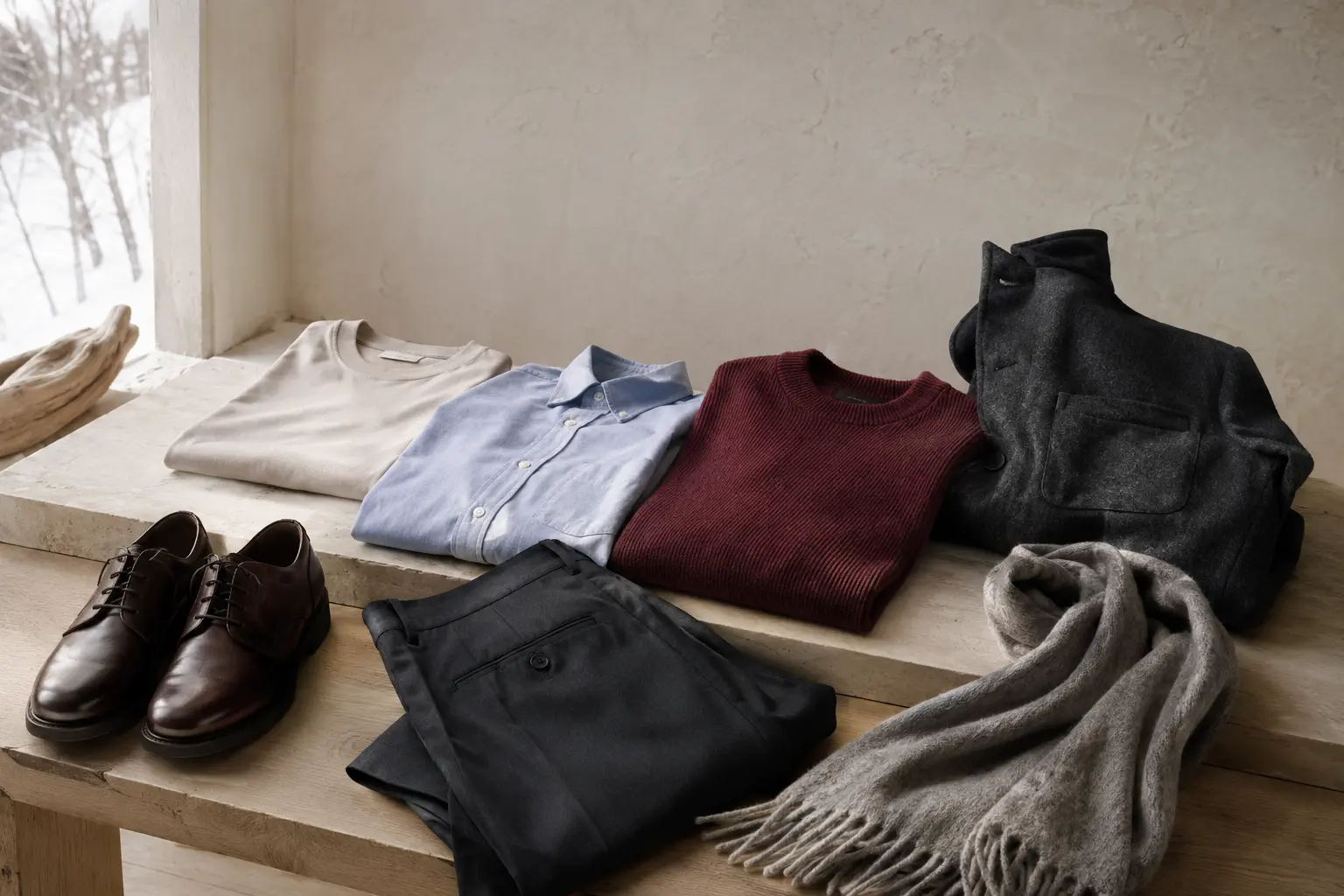
A useful Canadian wardrobe is not one enormous closet prepared for every imaginable forecast. It is a flexible system: a small group of layers that can move between indoor heat, wind, rain, and a sudden change in temperature.
The goal is not to prescribe one look. It is to make getting dressed simpler. Start with your actual routine, choose pieces that work together, and leave specialized gear for the conditions that truly require it.
Begin with your week, not a shopping list.
Write down the situations you dress for most often: work, errands, evenings, outdoor time, or formal occasions. Give the most space to the clothing that supports those repeated days. A wardrobe becomes practical when its proportions reflect your life rather than an imagined version of it.
Build three useful layers.
Think in terms of a base layer, a middle layer, and an outer layer. A comfortable T-shirt or collared shirt can form the base. A knit, overshirt, or light jacket can add warmth. An outer layer can address wind or precipitation. Each layer should fit comfortably over the one beneath it without limiting movement.
Choose a colour relationship.
You do not need a wardrobe made entirely of neutrals, but you do need colours that can share an outfit. Choose two or three dependable foundation colours, then add a smaller number of accents you genuinely enjoy. Before buying a new piece, picture it with at least three things already in your closet.
Let footwear match the conditions.
Footwear does more work when it suits both the weather and the distance you normally travel. Consider traction, room for the socks you actually wear, drying time, and whether the construction can be maintained. A polished appearance is useful only when the shoe is practical enough to leave the house.
Test ten complete outfits.
Before adding anything, assemble ten outfits from what you already own and photograph the combinations you like. The exercise reveals real gaps—perhaps one layer, one pair of trousers, or a simple accessory—without turning every uncertainty into another purchase.
Budget for care as well as purchase.
Read care instructions before committing. Consider cleaning, storage, alterations, and repair. A less expensive piece that is difficult to care for may not be good value, while a well-used item that can be maintained may earn its cost over time.
Dress for the day you have—and leave room for the weather to change.
A versatile wardrobe is allowed to develop slowly. Wear what you own, notice what repeatedly makes the day easier, and use that evidence to decide what deserves the next place.
This is general, brand-neutral wardrobe guidance. No brand or retailer sponsored, reviewed, or endorsed this article. The image is an original editorial visual and does not depict products offered for sale.