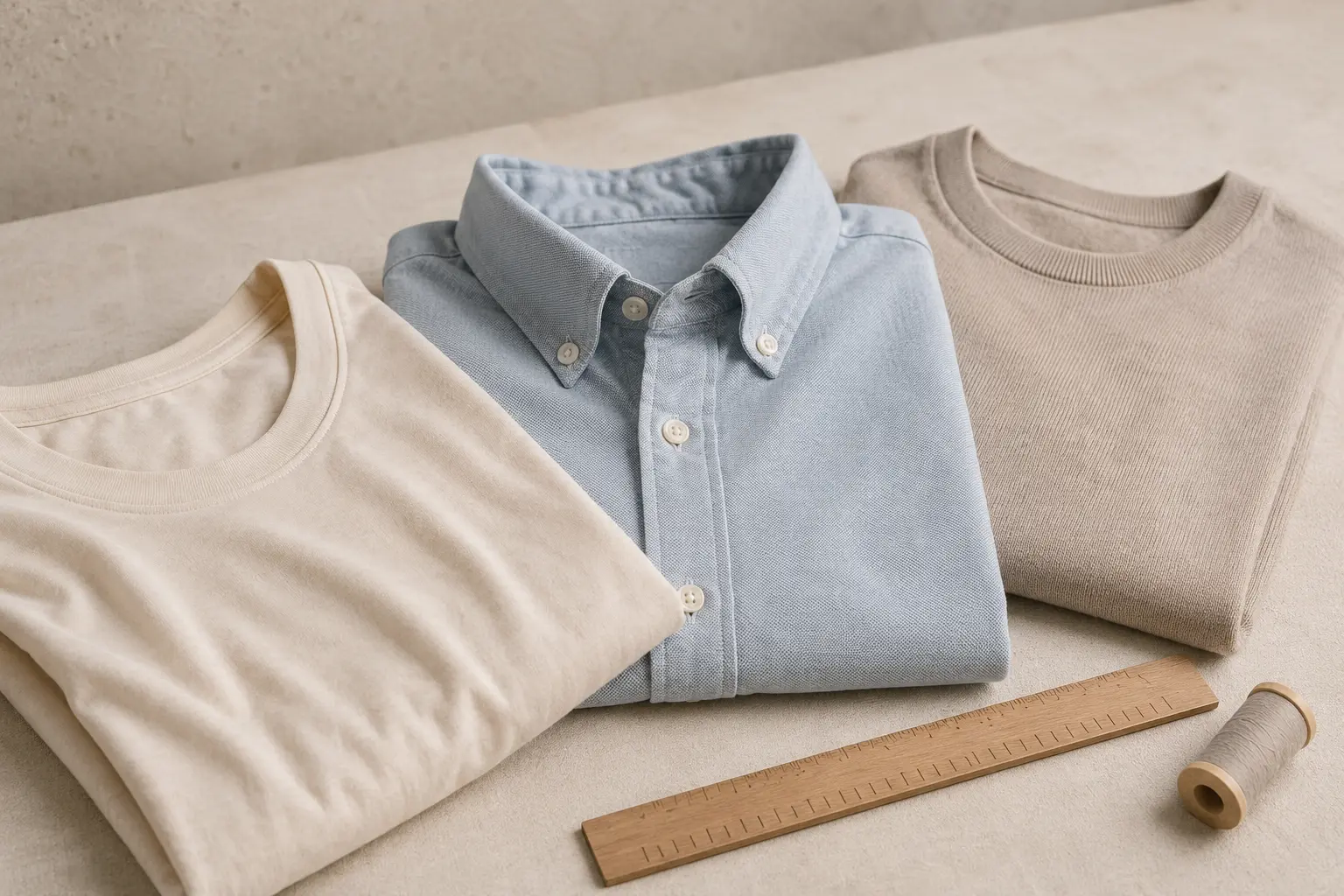
The hardest-working shirt is rarely the loudest one. It fits the way you prefer, feels comfortable for the intended use, survives your normal care routine, and connects easily with the rest of your wardrobe.
Labels can offer context, but they cannot decide fit or value for you. Use the following checks to compare pieces on their own merits.
Decide what the shirt needs to do.
A T-shirt worn alone may need a different weight and shape than one used beneath a jacket. A collared shirt for frequent office wear may need to move comfortably while seated and remain easy to care for. Define the job first; then evaluate the garment against it.
Check the shoulders before the size label.
Start with where the shoulder seam sits, how the fabric moves across the chest and back, and whether raising your arms pulls the entire shirt out of place. Size names vary. The garment’s relationship to your body is more useful than the letter printed inside it.
Notice weight, texture, and drape.
Fabric weight influences how a shirt hangs and how much structure it appears to have. Texture can add visual interest without a graphic or logo. Hold the fabric, view it in natural light, and consider whether its feel and opacity suit the way you intend to wear it.
Read the care instructions early.
Care requirements are part of the purchase. If a garment’s instructions do not match your routine, it may spend more time waiting to be cleaned than being worn. Follow the maker’s directions and consider whether you are comfortable with the expected maintenance.
Look closely at construction.
Inspect seams, hems, button attachment, collar shape, and the way patterned fabric aligns where panels meet. No single detail guarantees longevity, but careful construction and a finish suited to the garment’s purpose are useful comparison points.
Use the three-outfit test.
Before buying, name three complete outfits you can make using clothing you already own. Include the shoes and outer layer. If the shirt works in only one very specific combination, decide whether that limited role is worth the space and cost.
Fit is information. The label is only a starting point.
The best comparison happens slowly: try the garment, move in it, understand the care, and judge how naturally it joins your existing wardrobe. A shirt earns value through repeated wear, not through a promise printed on the tag.
This is general, brand-neutral clothing guidance. No brand or retailer sponsored, reviewed, or endorsed this article. The image is an original editorial visual and does not depict products offered for sale.